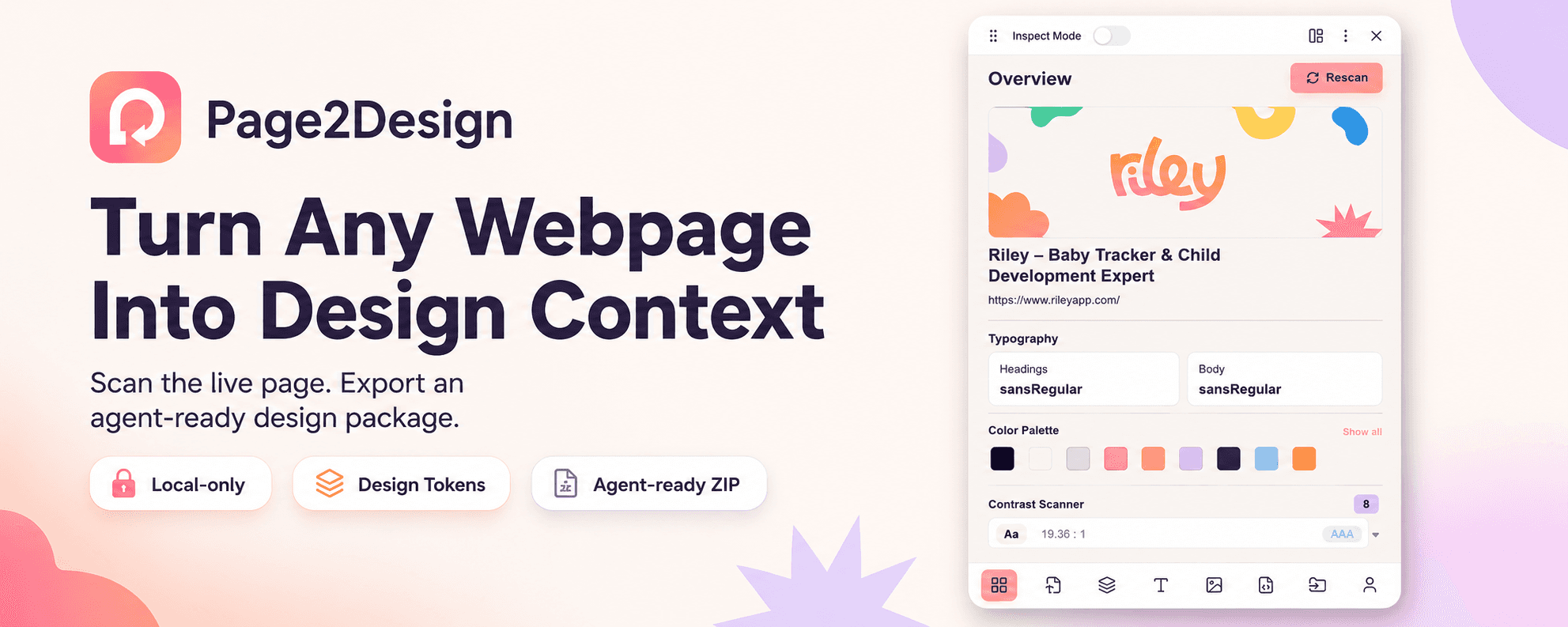
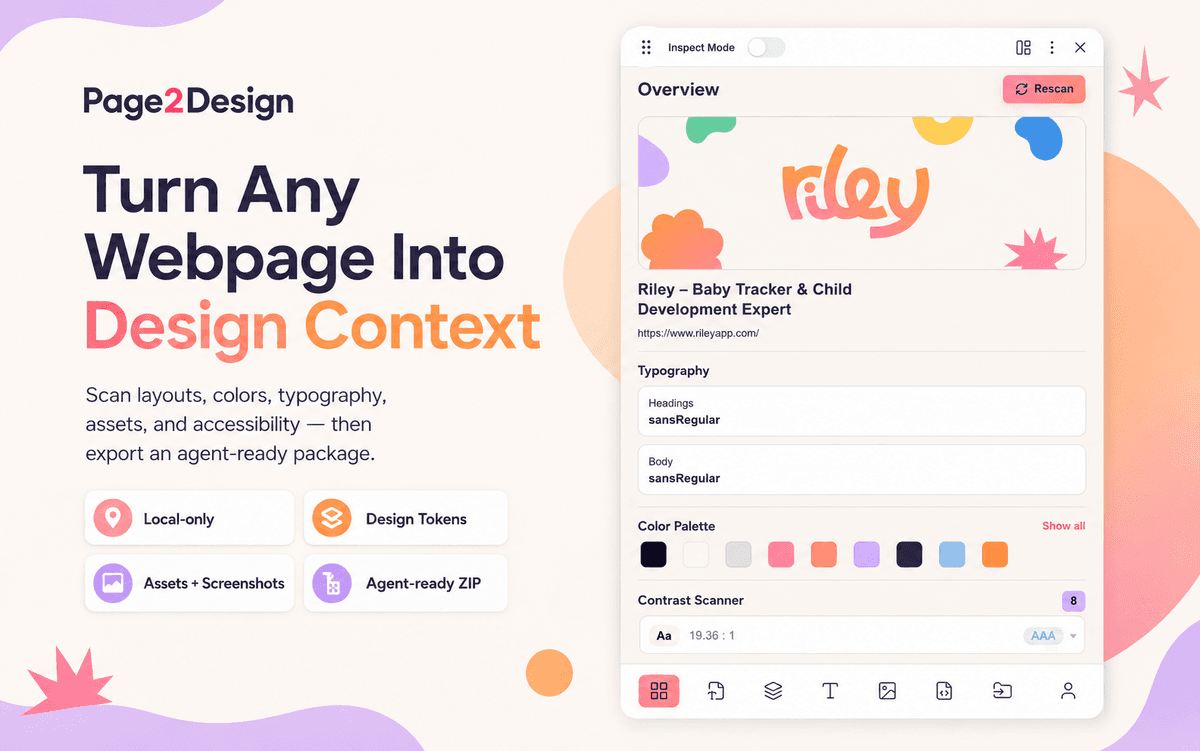
SummaryPage2Design is a local-only Chrome Manifest V3 extension that scans the active tab and turns the observed page into one agent-ready ZIP. Capture, IndexedDB storage, and export all stay on the device — there is no backend, account, or upload API. The ZIP helps Cursor, Claude Code, and similar coding agents recreate the rendered page; it does not recover original source, React trees, or private form values.
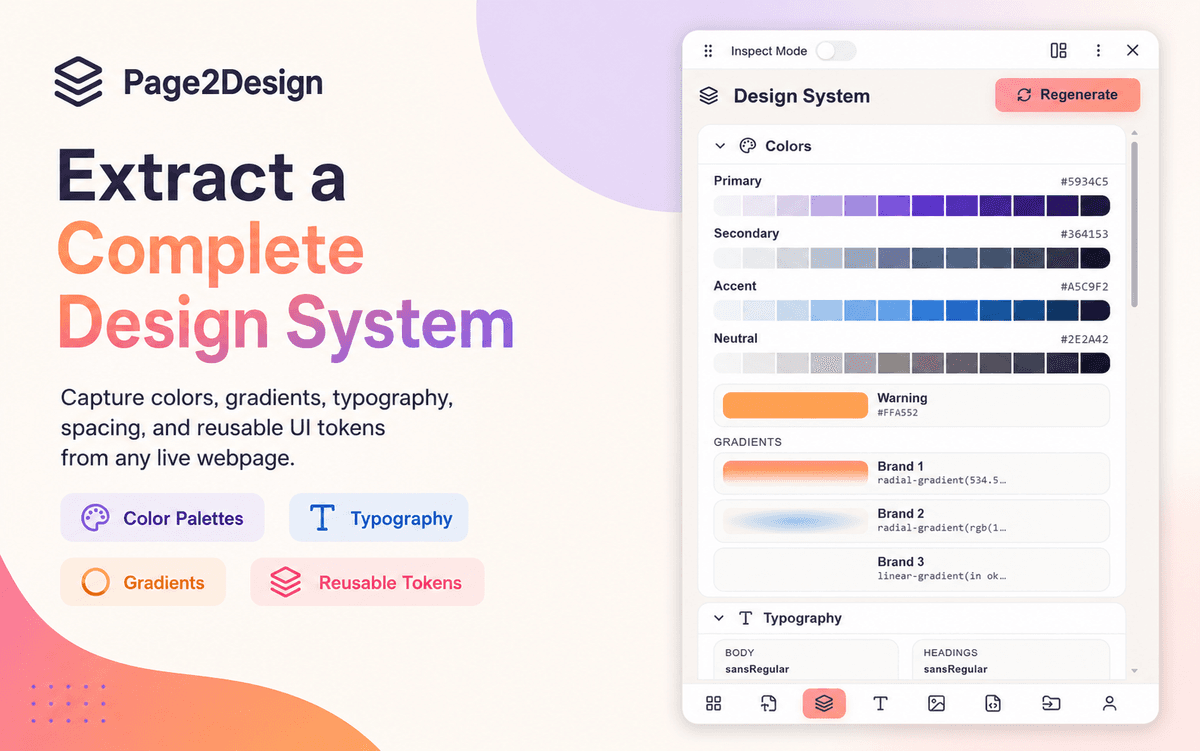
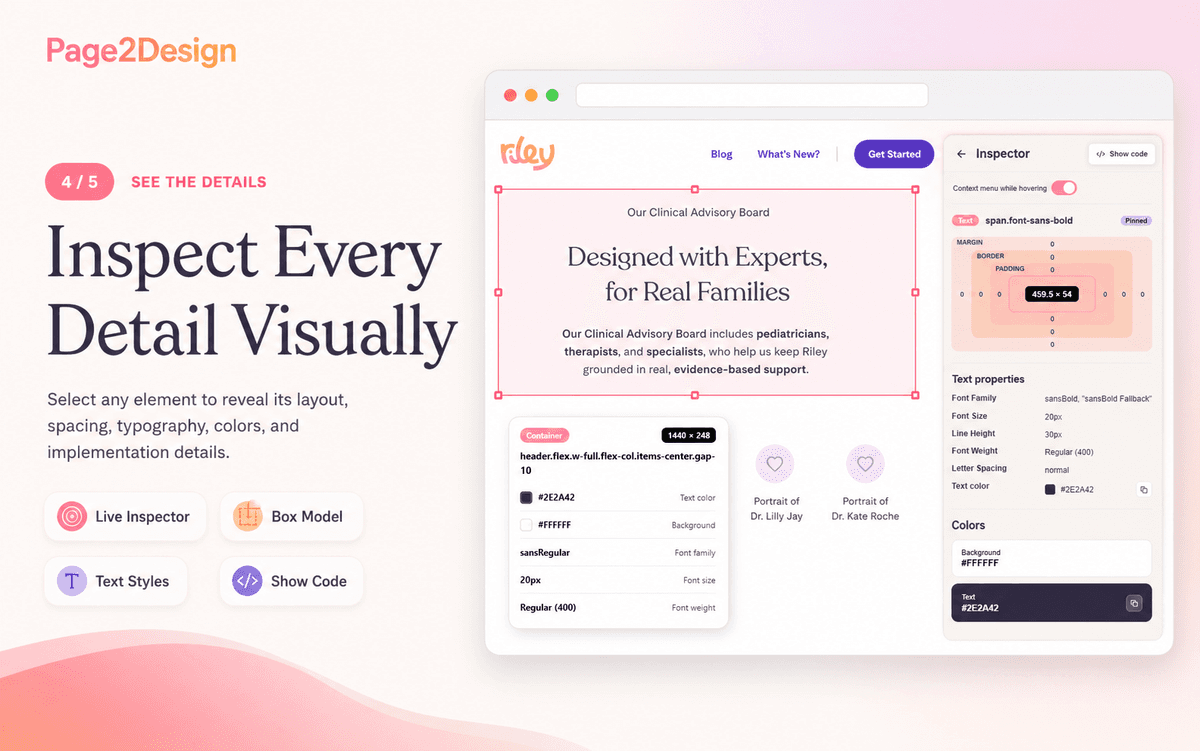
The inspector is a React 19 + Zustand UI shared by a floating overlay on normal http(s) sites and Chrome’s side panel on restricted pages. After a scan, Overview, Design System, Typography, Content, and Assets show measured tokens, copy, and media. More Options opens a Responsive preview with 39 device presets (phones, tablets, desktops) in a Mac-style iframe — without the debugger permission or resizing the live tab.
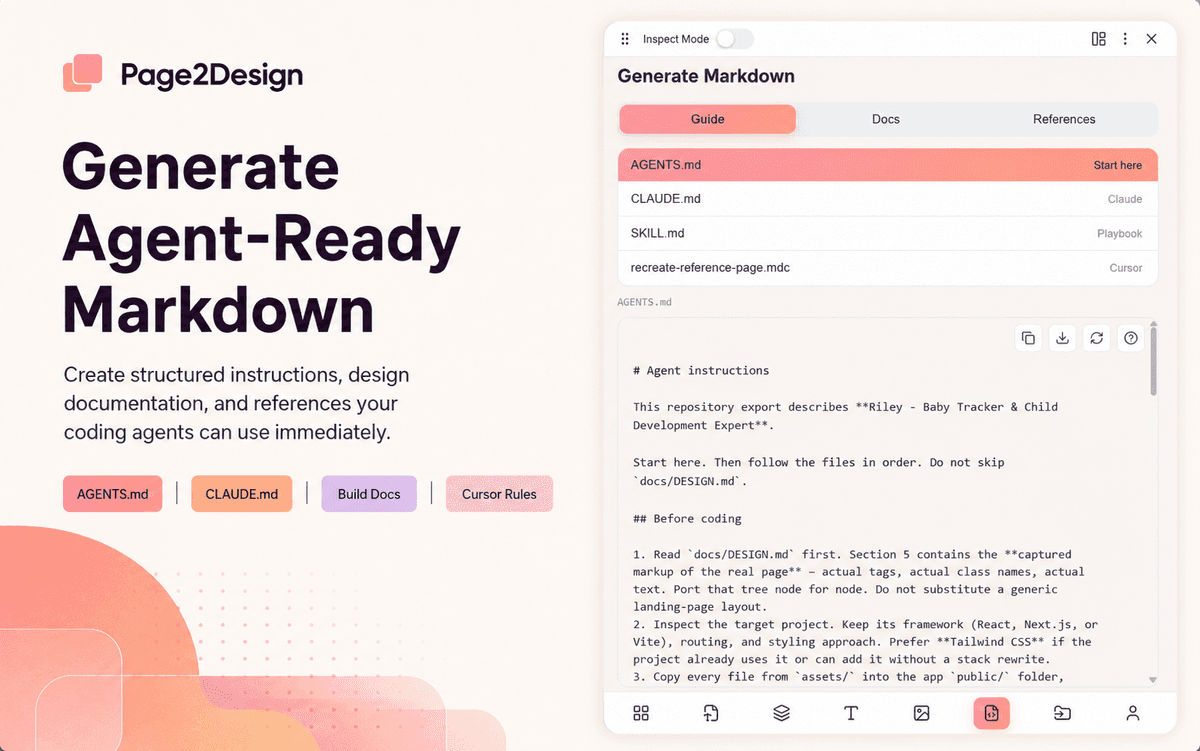
Export produces AGENTS.md, docs/DESIGN.md, build/validate prompts, JSON references, screenshots, and an assets/ folder. Missing files are omitted and listed in limitations.json instead of invented. First Chrome Web Store publish was 1.0.0 (25 Aug 2026); the open-source repo is 1.0.1.
My SolutionI designed and built Page2Design as a local-only Chrome MV3 product: content-script scanners, a service-worker orchestrator, and a React 19 inspector. I implemented chunked PageScan transport, normalization into design tokens, IndexedDB caching, privacy redaction for passwords and sensitive query params, and a JSZip export that coding agents can follow from AGENTS.md. Responsive preview uses an iframe plus session declarativeNetRequest rules — no debugger permission — and gaps go into limitations.json rather than fabricated output.